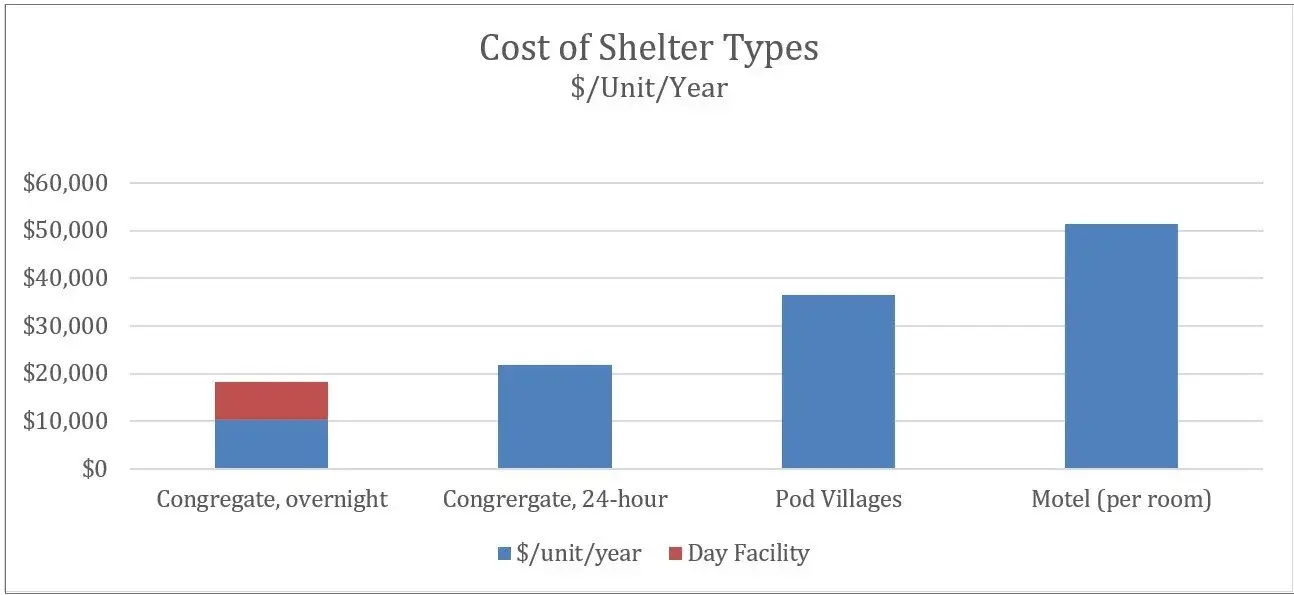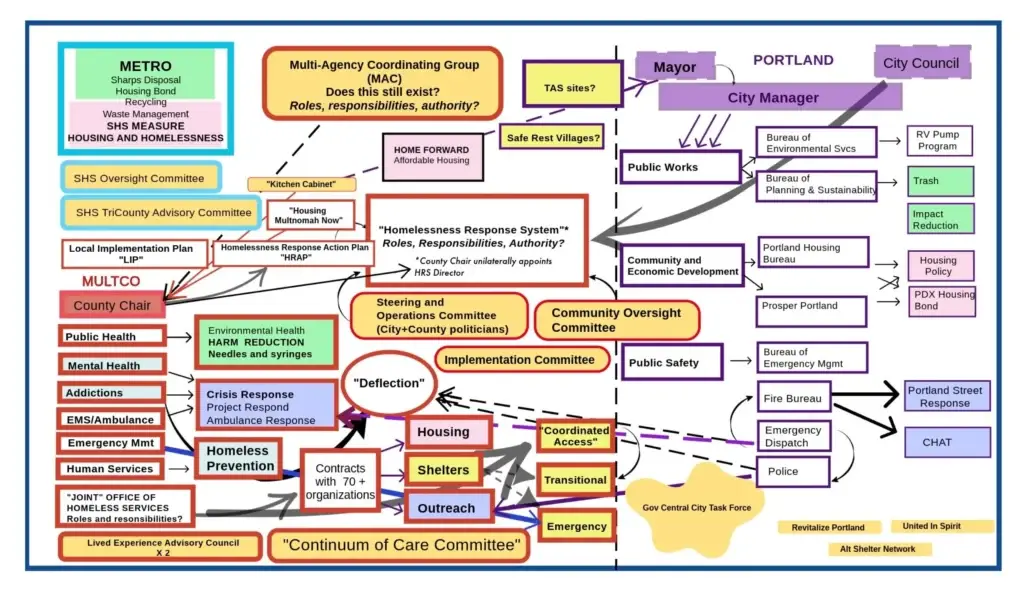
The city and county fund various shelter and housing programs to reduce homelessness. In general, the data provided to evaluate these programs is missing, incomplete, contradictory, or confusing. Nevertheless, in this report we try to distinguish between the major types and attempt a cost-benefit analysis. We welcome comments and corrections from our readers.
“Shelter” is a place for a homeless person to temporarily get off the street with a roof, bed, toilets and showers and a place to put their possessions.
“Housing assistance” encompasses a number of programs and services to help individuals and families secure and maintain stable housing, including rent assistance, rapid rehousing, eviction prevention, and payment of utilities, application fees, moving costs.
“Supportive housing” combines temporary or permanent housing with support services such as healthcare, including mental health and substance abuse treatment, and job training.
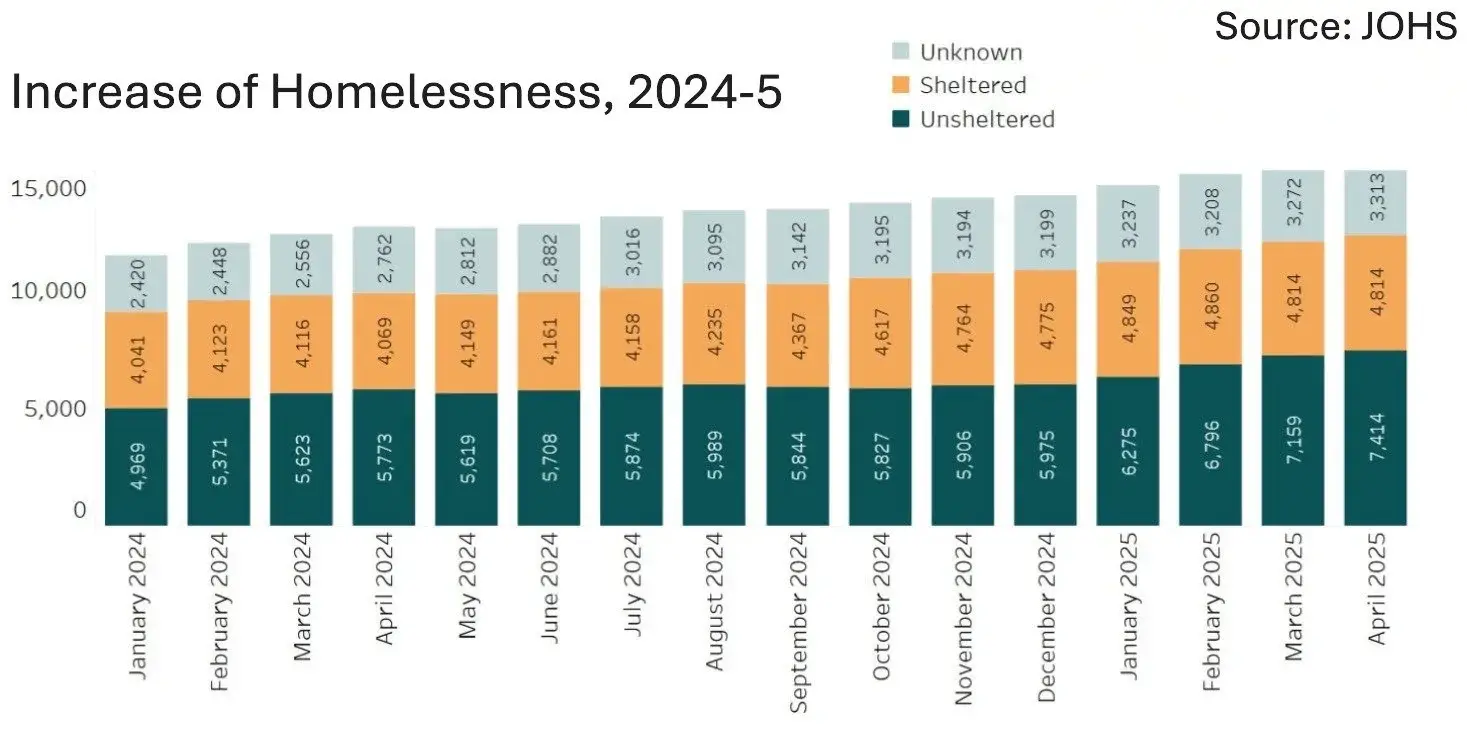
All three of these housing solutions are implemented in a context where the number of homeless, both temporarily sheltered and unsheltered, has continued to increase in Multnomah County in each of the last five years. Each should be evaluated for cost per person served and effectiveness in aiding the homeless receive treatment and to achieve permanent housing, as well as raising the quality of life in the most impacted areas of our city. [i]