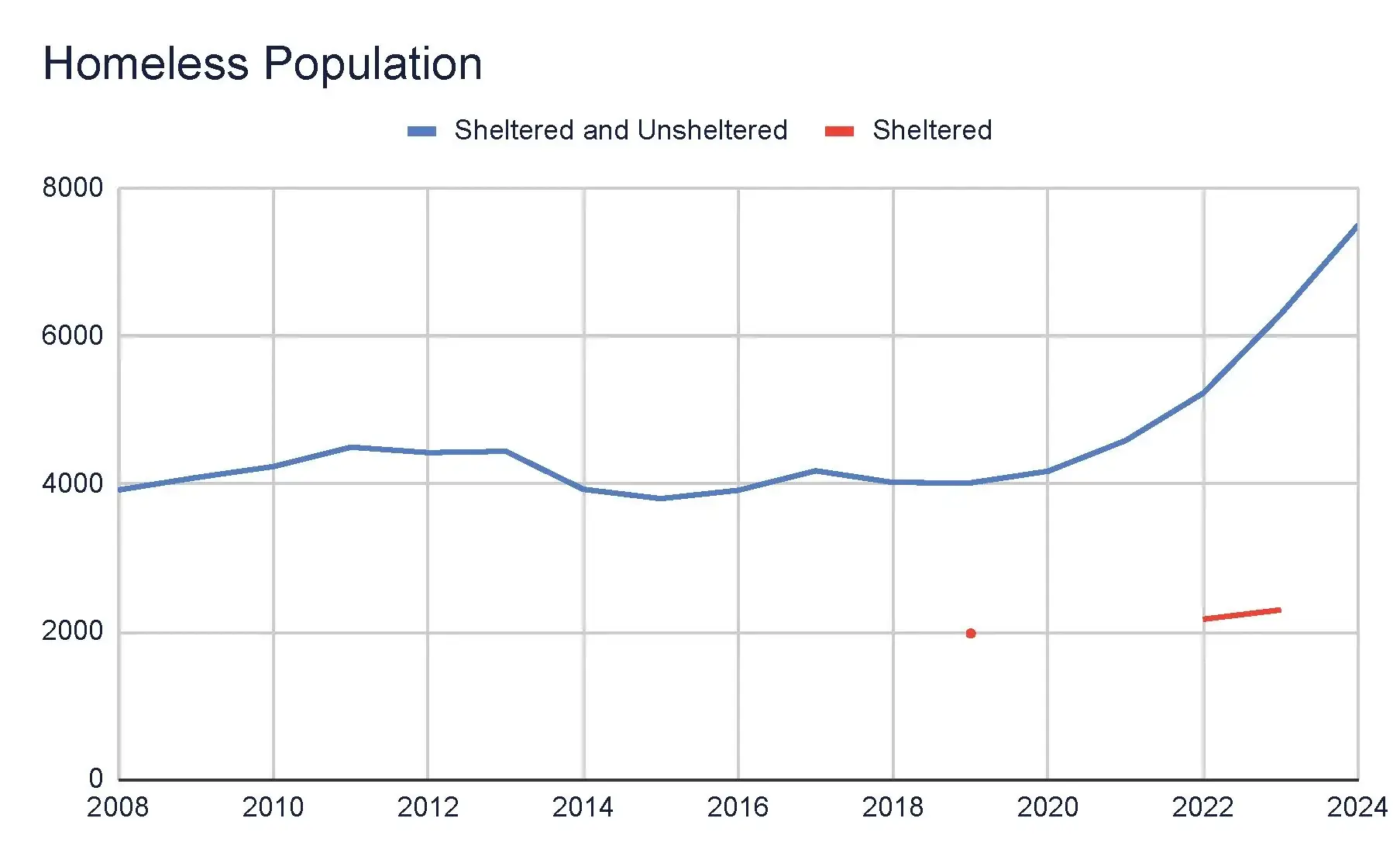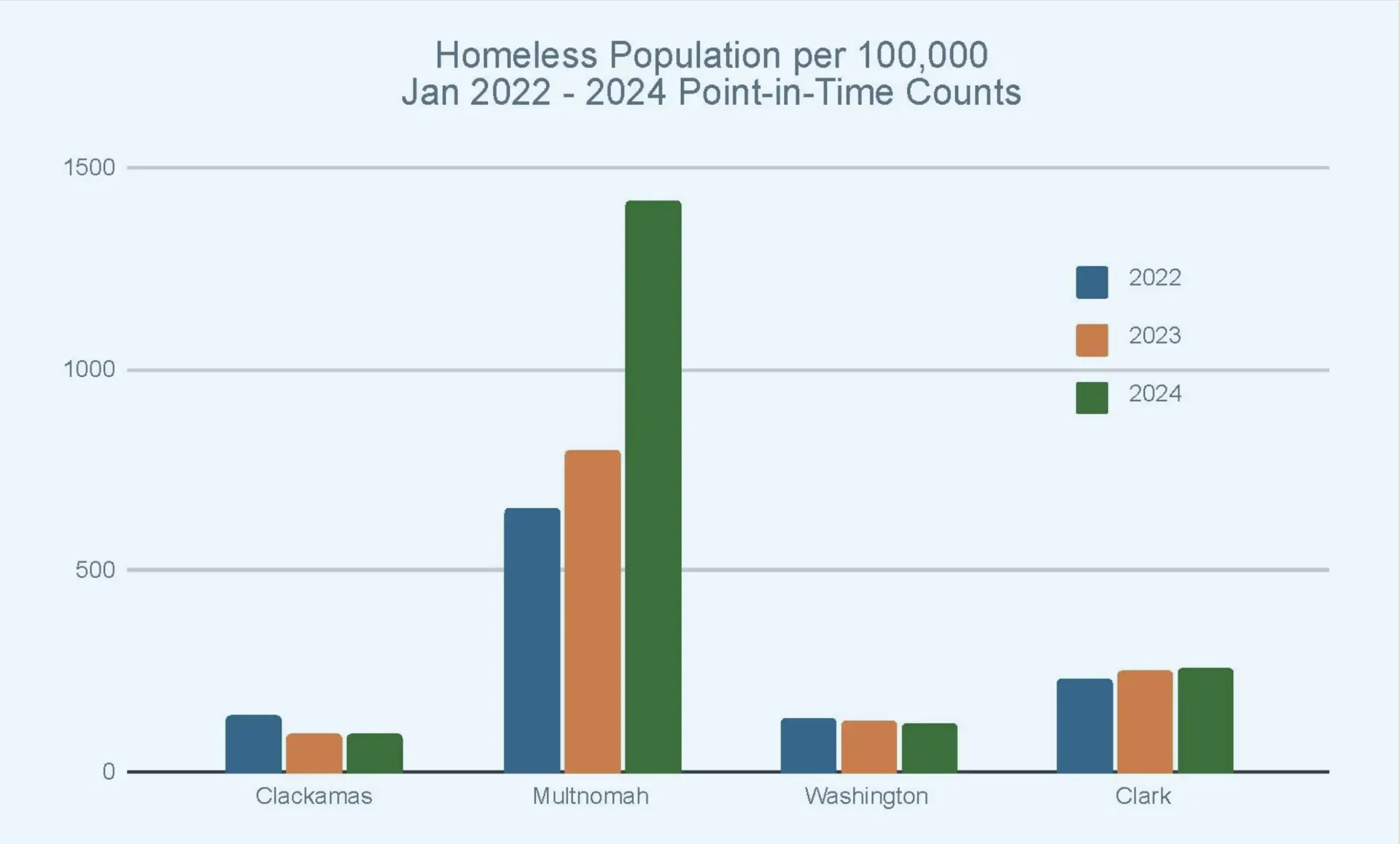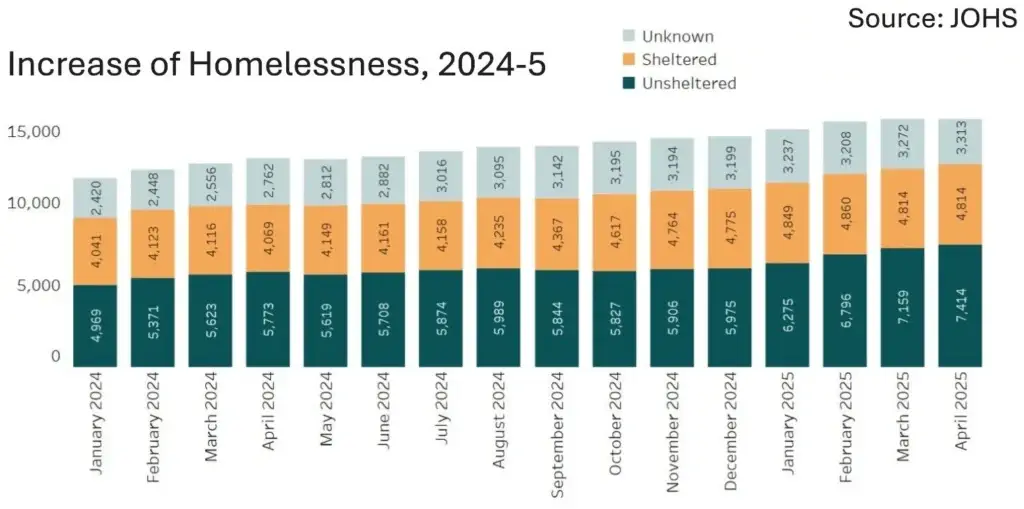

We have not had timely or reliable data on our homeless situation. Even the number of people experiencing homelessness in the county was not known until recently. The January, 2023 Point-in-Time count reported 6,300 homeless people. Using the county’s By-Name-List, they reported 11,135 in January, 2024. Only in the last few days (April 16,2025) did the county publish a monthly report. Using the By-Name-List, they reported 14,864 homeless people in February, 2025. It is not clear how accurate this number is, but least we finally have a consistent time-line for this key metric.
The county does not even know how many shelter beds are available. JOHS (the county’s Joint Office of Homeless Services) reports on 2,457 shelter beds. A study by PSU says there are 3,149. And an unofficial spreadsheet by Portland Solutions, a department of the Portland mayor’s office, counts 4,764 shelter beds. The By-Name-List count from February, 2025 counted 4,860 of the homeless in shelters, with the shelters being 92% occupied (implying there are about 5,280 shelter beds). These large discrepancies indicate we just do not know the actual number. How can we manage the shelter system when we don’t even know how many there are?
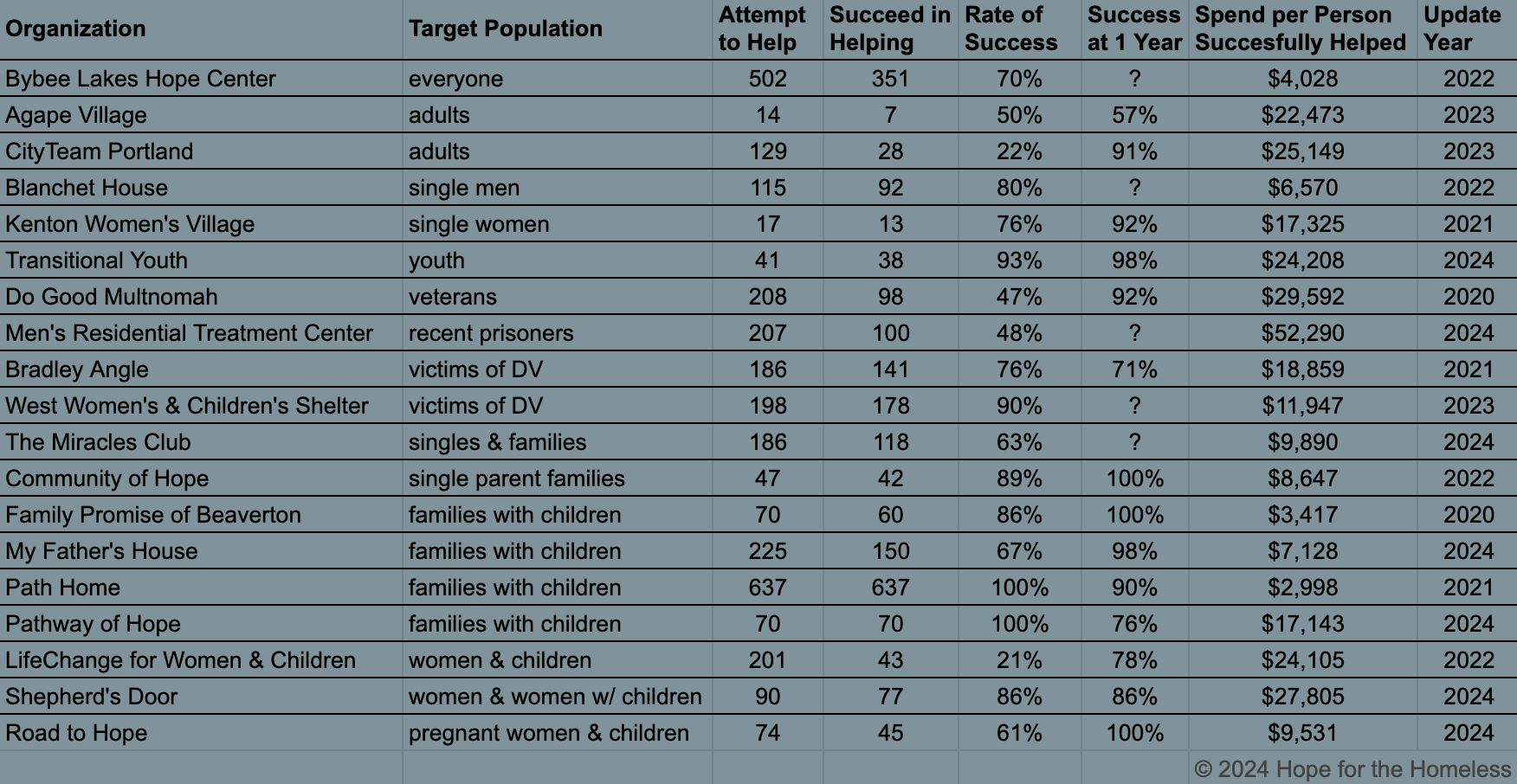
We also need to know if the policy solutions are successful and cost-effective. Current governmental audits of the homeless service providers check for honesty and contract compliance, not if they are getting homeless people off the street. Hope for the Homeless is the only group we have found in Portland who tries to determine money spent vs. success rate. Of course, somebody with no medical disabilities who is recently homeless will cost substantially less to help than the chronically homeless, and there are many additional criteria that measure success.
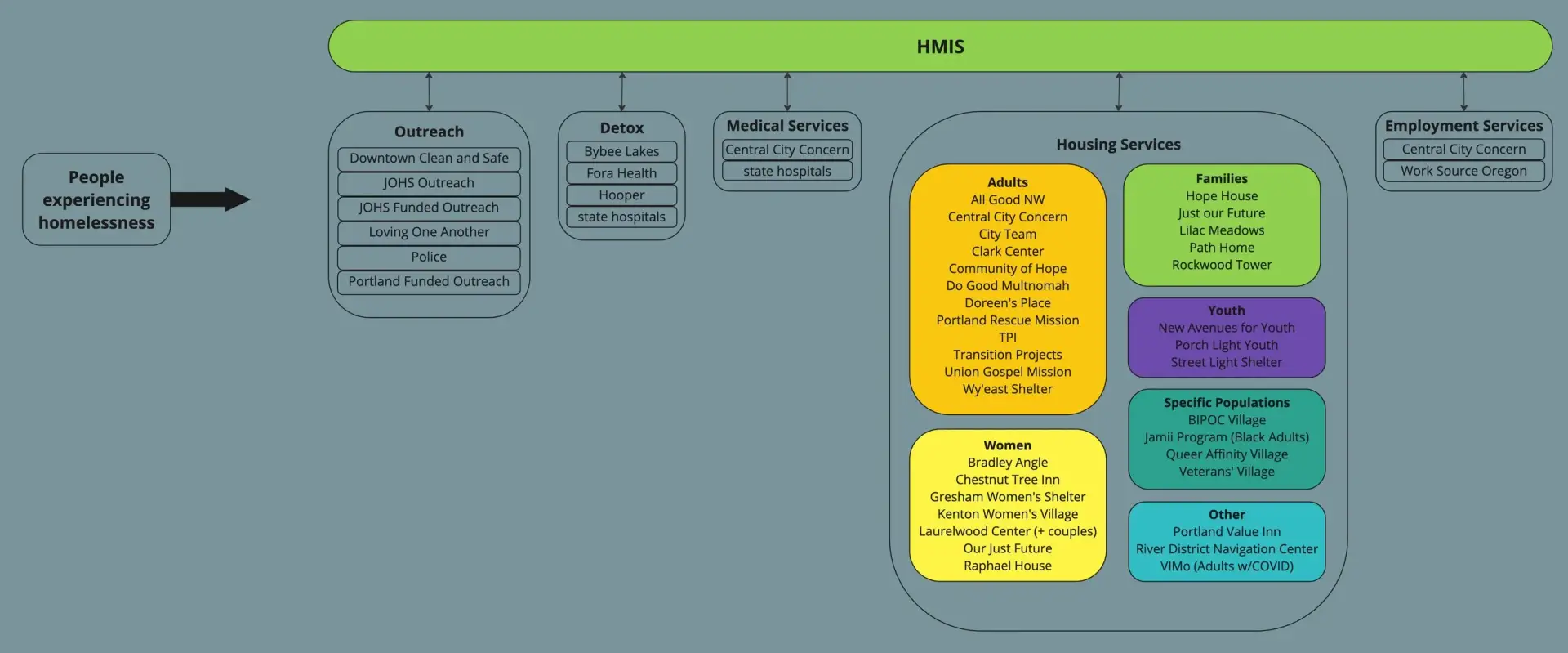
HMIS reports progress in moving people into shelter and supportive housing, but not how many stay in these programs, nor whether the total number of unhoused on the street is increasing or decreasing. The number of disabled or homeless due to a medical emergency is poorly documented and often people are discharged from hospital stays onto the street.
The specific needs of the client, such as treatment for drug addiction or mental health; water or food; shelter whether temporary, transitional, or long-term supportive are often not asked or recorded. Hope for the Homeless, at least, is trying to determine if the vast sums of taxpayer money are being spent effectively. They use their data to select who receives their grants. The county and city need to do the same in deciding who gets their funding by broad and agreed criteria.