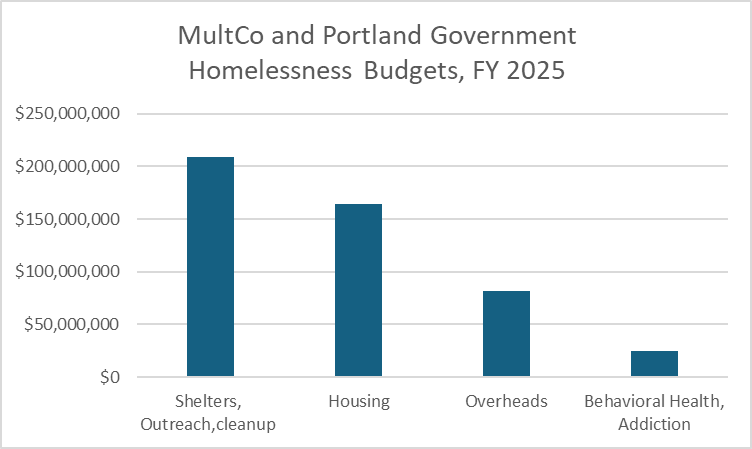
Various numbers have been reported that claim to total the spending on homelessness in Multnomah County. They include the costs of shelters, clean-ups, supported housing, street outreach, and similar services. But they do not include the cost of treating addiction and mental illness among the homeless (see Portland Voice Report #4). At the governmental level, the issue of behavioral health (BH) problems and drug addiction among the homeless is downplayed or even ignored.
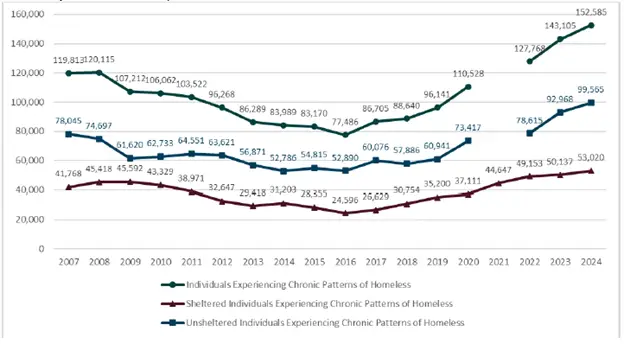
This is even reflected in the statistics the government publishes. The typical report from the Joint Office for Homeless Services will divide the homeless population into about 15 categories of ethnicity and 5 categories for gender. But any and all behavioral health problems, from long-term drug addiction to severe schizophrenia to mild depression, are listed under the one catch-all category of “Behavioral Health”. The government does not even try to keep track of the BH problems of the homeless population, much less attempt to plan for and provide the vital services they require to recover from them.
This neglect is rooted in the financial and policy structures.
BEHAVIORAL HEALTH FUNDING
By statute, BH services are the responsibility of the county. These services fall under the county Health Department, comprising about 23% of its budget. But most of that goes to funding BH programs for schools, prisons, and the general population. Very little is direct funding for BH services for the homeless.
The BH providers that do serve the homeless are not compensated by the county Health Department or the Homeless Service Department but fund themselves through charity or from the state through Coordinated Care Organizations (CCOs), which in turn are funded through the state’s Medicaid program (the Oregon Health Plan, OHP).